
Welcome to The Business Ops Blog
Here, you’ll find articles on operations, execution, and the systems behind scale. I use this space to break down the bottlenecks, weak handoffs, and structural problems that shape how companies actually run.
Don’t See What You’re looking For Yet? Send your request here and I’ll add it to the queue.

How One Broken Workflow Created a Full Day of Lost Revenue Every Week
What looked like a workload problem was actually a workflow problem. This article breaks down how one broken process created rework, trapped capacity, and lost billable time, and how redesigning the flow of work fixed it.

How Operators Can Find Hidden Workflow Risk Before It Spreads
Part 2 translates the Finnair lesson into a practical diagnostic for operators. It shows how to find the small workflow step quietly creating rework, delays, and downstream customer problems before it turns into a larger structural issue.

The €50 Part That Grounded an Airline
A low-cost seat-cover issue grounded 8 Finnair Airbus A321s, canceled about 70 flights, and disrupted roughly 11,000 customers. The real problem wasn’t the part. It was the weak upstream process around it, and every operator should recognize the pattern.

Maximum Control, Minimum Support
This analysis breaks down World Athletics’ new transfer rules, the logic behind them, and why athlete mobility matters in a financially fragile pro track system.

Why Busy Teams Still Fall Behind
Many teams feel maxed out long before they are actually at capacity. This article breaks down how rework, waiting, and broken handoffs create the illusion of overload and what operators should look at before adding headcount.

AI Is a Leadership Filter, Not a Magic Wand
AI won’t fix broken systems. It’ll expose them. Most companies rush into AI chasing efficiency, only to automate their dysfunction and erode customer trust. The smart ones slow down, clean house, and anchor every decision in operational discipline, cultural alignment, and profit reality.

When Revenue Runs on Rented Rails
This article uses the LTK backlash to examine a broader business problem: what happens when a company outsources a critical revenue function to infrastructure it does not control.

SaaS Sprawl Isn’t a Budget Problem
SaaS sprawl doesn’t happen because founders overspend. It happens because subscriptions become unowned, renewals happen by default, and tools outlive their purpose. This article breaks down the control pattern that stops drift and keeps your stack lean without constant attention.

What Block Actually Changed So AI Could Move Real Work
Block’s AI story isn’t about faster code. It’s about how they rebuilt structure, standards, and system-connected automation so AI could move real work without creating noise.

How to Stop Paying for the Same Work Twice
Part 3 introduces the Capacity Recovery Playbook: a practical guide to using DMAIC to strip rework, waiting, and friction out of stabilized workflows. If execution feels heavy, this is how you recover hours without adding headcount.

From Theory to Everyday Execution: The Operator’s Playbook (Part 2)
Part 2 moves past industry theory and delivers the Execution Control Blueprint—a practical, step-by-step playbook for your own business. It shows you exactly how to install the foundational controls needed to stop preventable rework and stabilize your workflows before you attempt to optimize them.

From Signed to Live: Building a Repeatable Delivery Engine
Booked ARR isn’t real until customers are live. If your implementation queue is bulging, you’re not scaling revenue, you’re scaling WIP. Here’s how to install the controls that turn onboarding into predictable execution.

The Sponsorship Rulebook Track Never Teaches
Most athletes are taught that medals create security. Sponsorship doesn’t work that way. Brands pay for demand, not results, which is why even a top-3 hurdler can enter a season as a free agent.

Part 2: The Series B Playbook
Series B is where execution becomes the product. This guide lays out a 60-day install to make launches repeatable, convert failures into permanent system upgrades, and give leadership a clear view of reality before reliability, margin, and trust break.
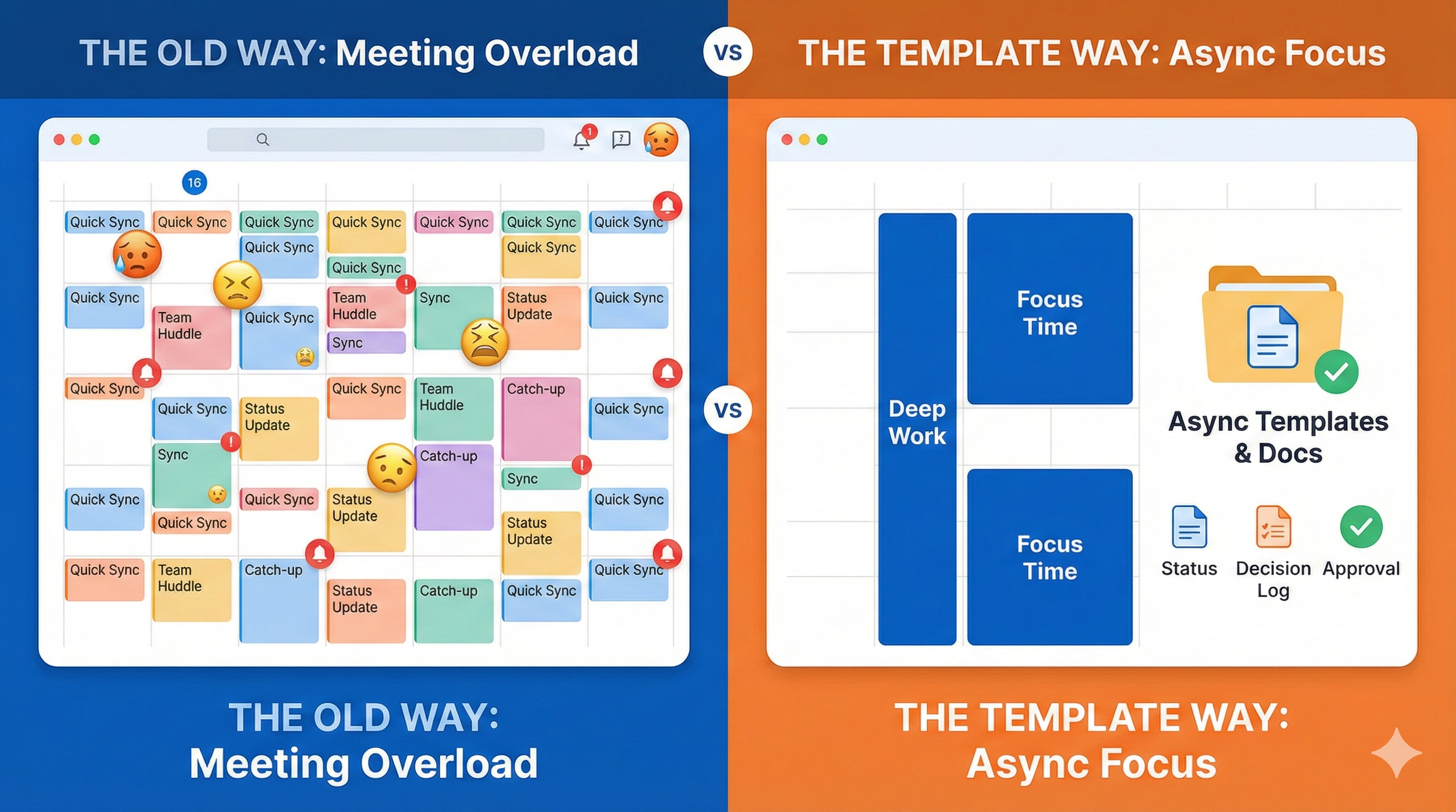
Part 2: The Templates (Copy, Paste, Run)
Most startups don’t have a meeting problem. They have a system problem, so meetings become the place where work, context, and decisions live. This template pack gives you the exact docs to move updates async, make approvals flow without calls, and force every meeting to produce a trackable receipt.

Your First Hiring Wave Is Where Your Time Goes To Die
Learn how to move from reactive firefighting to intentional design with a 30-day hiring sprint designed to buy back founder capacity and protect your runway. This case study breaks down how to replace operational chaos with a repeatable, minimum viable hiring system.

Your Metrics are Telling You a Story, Not the Truth
Your dashboard can be glowing green while your business is quietly drifting off course. When metrics rely on manual updates, they stop measuring reality and start reflecting incentives. This article breaks down the five ways metrics stacks lie, why “pretty charts” create false confidence, and the practical blueprint to turn reporting into decision-grade data, including a 7-day reset you can run immediately.

The Hidden Runway Leak of Rework
Most founders assume being "slammed" is a hiring signal, but it is often the sound of a "Do-Over Tax" quietly leaking your runway. By auditing the gap between total effort and actual output, you can recover significant capacity without adding a single dollar to your payroll.

From Bankruptcy to Backbone: Rethinking How Track and Field Scales
This article examines why Grand Slam Track (GST) 1.0 failed and lays out a blueprint for GST 2.0. It argues that instead of building another league, the sport needs an Operating System that centralizes discovery, data, and fan engagement to make track and field self-sustaining and profitable.

The Billable Leak: How One Broken Process Was Stealing a Full Day of Revenue Every Week
Stop paying for the same work 3x. Use the "Triple-Touch" math to diagnose rework loops, recover billable revenue, and fix trapped capacity in knowledge work.