
Welcome to The Business Ops Blog
Here, you’ll find articles on operations, execution, and the systems behind scale. I use this space to break down the bottlenecks, weak handoffs, and structural problems that shape how companies actually run.
Don’t See What You’re looking For Yet? Send your request here and I’ll add it to the queue.
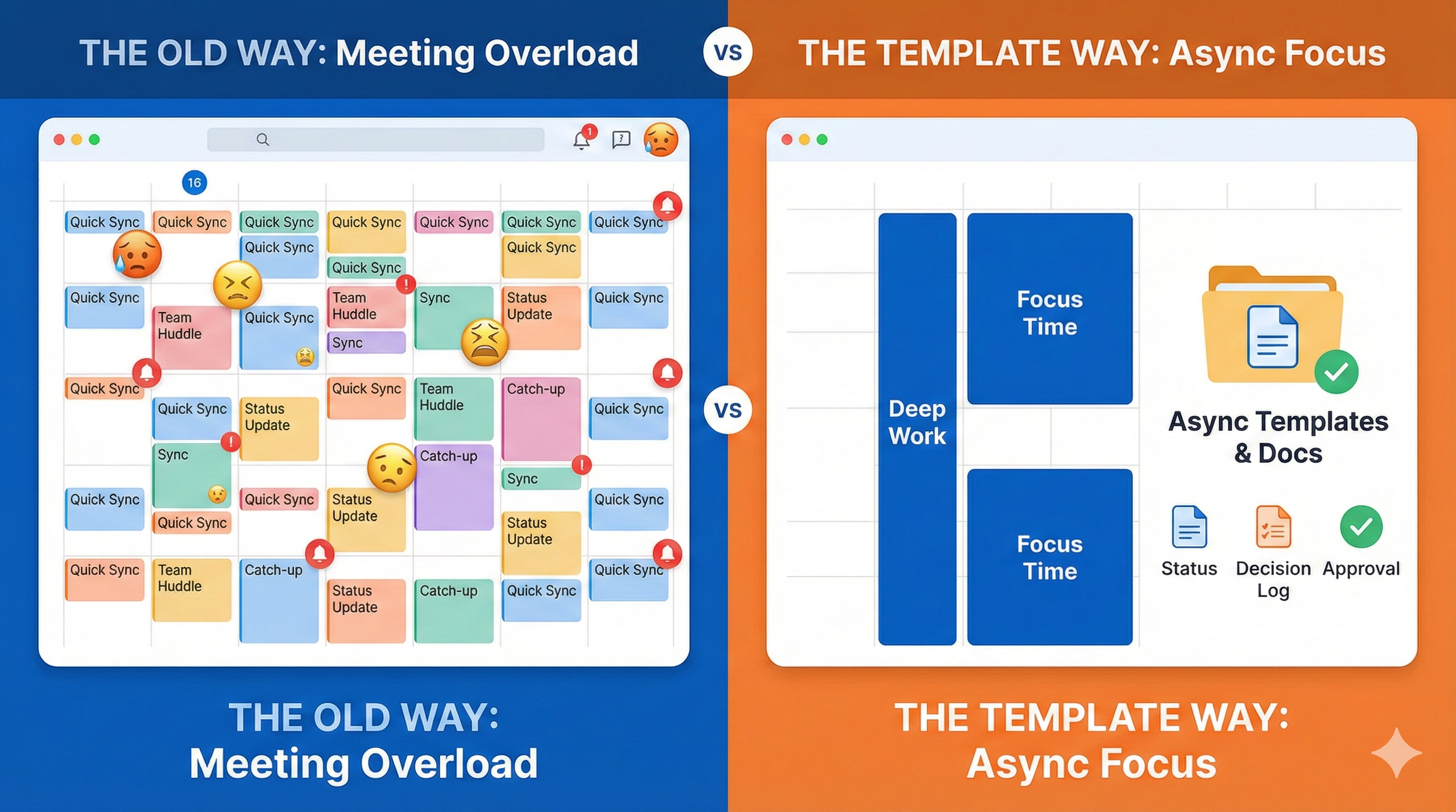
Part 2: The Templates (Copy, Paste, Run)
Most startups don’t have a meeting problem. They have a system problem, so meetings become the place where work, context, and decisions live. This template pack gives you the exact docs to move updates async, make approvals flow without calls, and force every meeting to produce a trackable receipt.

The Meeting OS: How To Cut Meetings Without Slowing Decisions
Meeting overload usually isn’t a time management problem. It’s an operating system problem. This 14-day plan shows how to convert update meetings into async templates, replace approvals with decision rights and intake standards, and keep only three recurring meetings that always produce a receipt.

Authority Without Confidence: The Stalled Reality of Anti-Doping in World Athletics
While World Athletics sells the illusion of a perfectly clean field, its own integrity unit admits the system has stalled against sophisticated cheats. This investigation audits the data behind the "credibility gap" and the legal fragility of a monopoly built on authority without verified confidence.

Your First Hiring Wave Is Where Your Time Goes To Die
Learn how to move from reactive firefighting to intentional design with a 30-day hiring sprint designed to buy back founder capacity and protect your runway. This case study breaks down how to replace operational chaos with a repeatable, minimum viable hiring system.

Buy Capacity Back Without Hiring
Overworked teams don’t always need more people. Most of the time, capacity is trapped in rework loops that shouldn’t exist. This deep dive uses United Airlines’ operating model to show where outpatient groups leak capacity, then gives you a 30-day sprint to buy it back without hiring.

Your Metrics are Telling You a Story, Not the Truth
Your dashboard can be glowing green while your business is quietly drifting off course. When metrics rely on manual updates, they stop measuring reality and start reflecting incentives. This article breaks down the five ways metrics stacks lie, why “pretty charts” create false confidence, and the practical blueprint to turn reporting into decision-grade data, including a 7-day reset you can run immediately.

The Hidden Runway Leak of Rework
Most founders assume being "slammed" is a hiring signal, but it is often the sound of a "Do-Over Tax" quietly leaking your runway. By auditing the gap between total effort and actual output, you can recover significant capacity without adding a single dollar to your payroll.

Selling a Sport vs. Selling a Solution
These weren’t competing leagues. One was a traditional sports business trying to survive on tickets and media rights, the other is a healthcare platform using controversy to buy attention and valuation.

Fenty Was an Operations Moment, Not a Moral Awakening
Inclusive shade ranges existed long before 2017. The real failure was access: deep shades were often understocked, pushed online, or treated as optional because retail shelf space is optimized for velocity. Fenty didn’t invent inclusion, it proved that inclusion could be executed at scale and that demand was being underestimated.

Authority Without Obligation
Sebastian Coe can call the Enhanced Games “bollocks” all day. The bigger issue is that World Athletics threatens long bans in a sport where most athletes are not salaried and don’t have guaranteed income. If the governing body can block an earning option, it owes a clear, credible replacement plan for how athletes actually make a living outside Olympic years.

How Adult Incentives Colonized TikTok
TikTok didn’t change because adults showed up. It changed because adult behavior outcompeted youth behavior once the platform became monetizable. When money, status, and performance become the incentive, “play” gets replaced by shock, oversharing, and engineered relatability, and the original culture becomes unrecognizable.

The Forces That Keep Track Fragmented
Track looks like it has a season because the Diamond League has a logo and a schedule, but the week-to-week reality is still driven by three forces that don’t care about branding: the calendar, the money, and negotiated participation. Until track has league-level control over those inputs, it will keep producing circuit-level outcomes, no matter how polished the wrapper looks.

Diamond League: The League That Can’t Enforce Anything
The Diamond League isn’t a broken league. It’s a “league” that can’t enforce anything, because the deal that created it protected meet autonomy over centralized control. Part 2 breaks down how a global rebrand and a big sponsorship check made the product look more unified without changing the structure that keeps it behaving like a circuit.

The League Fantasy, On Repeat
Every few years, someone looks at track’s chaos and says, “Easy. Build a league.” Then the sport does what it always does: prioritize championships, outsource risk to promoters, and let the pro season run like a freelance marketplace. That isn’t a glitch. It’s the design. Athletics is two overlapping systems with two different goals, and calling everything a “league” just hides the real structural conflict.

Stewardship vs. Support
World Athletics governs track & field with authority and legitimacy. But governing the sport is not the same as stewarding professional athletes. This article examines how World Athletics indirectly controls access to professional opportunity while leaving athlete careers structurally unsupported and why that stewardship gap is becoming harder to ignore.

When Does World Athletics’ Responsibility to Athletes End?
World Athletics tightly governs eligibility, rankings, and competition access across Track & Field. What it does not clearly define is where its responsibility to athletes begins or ends. This article examines how that boundary is implied through system design rather than stated outright, and what happens to athletes when support quietly disappears while regulation remains.

From Bankruptcy to Backbone: Rethinking How Track and Field Scales
This article examines why Grand Slam Track (GST) 1.0 failed and lays out a blueprint for GST 2.0. It argues that instead of building another league, the sport needs an Operating System that centralizes discovery, data, and fan engagement to make track and field self-sustaining and profitable.

The Money Talk Is Missing a Name
Track money talk usually focuses on the visible checks: shoe contracts, meet invites, prize money, federations. The missing player is often World Athletics, even though it controls the rules, calendar, and eligibility standards that decide what “counts” and who gets access to opportunity. When WA can delay transfers with a waiting period or set reimbursement and accommodation standards, it’s shaping athlete cash flow and leverage without ever signing a paycheck.

This Isn’t Content Creation. It’s Power Accumulation
Becca Bloom’s content isn’t just luxury entertainment. It’s influence infrastructure. Learn how emotional loops, cultural signaling, and “template” replication compound reach and power.

The Billable Leak: How One Broken Process Was Stealing a Full Day of Revenue Every Week
Stop paying for the same work 3x. Use the "Triple-Touch" math to diagnose rework loops, recover billable revenue, and fix trapped capacity in knowledge work.